Two team members who used to work well together now refuse to attend the same meetings. Emails turn sharp. Others start taking sides. Work slows down, and HR knows that if nothing changes, someone will resign or file a formal complaint.
This is where workplace mediation steps in. A mediator brings both people together for a structured conversation that gets to the real conflict, not just the surface complaints, and helps them find a way to work together again or part professionally.
Key takeaways
- Workplace mediation addresses colleague conflict before it grows into resignations, grievances or legal action.
- A mediator is neutral. They guide the conversation; they do not judge or impose solutions.
- The process moves through preparation, an opening session, exploring interests, generating options, agreement and follow-up.
- Mediation needs willing participants and is not suitable for harassment, bullying or serious power imbalances.
Ready to Get Started?
Take the next step in your professional development.
Why workplace conflict escalates
Unaddressed issues build. A missed deadline, a misread email or a perceived slight can quietly grow for months. By the time managers notice, trust is already broken.
People avoid confrontation. Most employees do not want to be seen as difficult. They stay silent and hope the problem fades. It rarely does.
Formal processes feel like a fight. Grievance procedures can feel adversarial, with winners and losers, so many people avoid them until the situation becomes unbearable.
What a workplace mediator does
A workplace mediator does not investigate who was right or wrong. They create a confidential space where both people can speak honestly, name the real issues and agree on a way forward they can both accept.
Stays neutral. The mediator does not take sides or decide the outcome. The colleagues own the solution.
Manages the process. The mediator sets ground rules, makes sure each person gets equal time, and keeps the focus on solutions rather than blame.
Surfaces underlying interests. A fight about meeting times may really be about feeling left out of decisions. The mediator helps each person say what they actually need.
Apply now: Explore the 40 Hours Professional Mediation Course at Elearn Training Institute. WhatsApp +254 701 893 388.
The six stages of workplace mediation
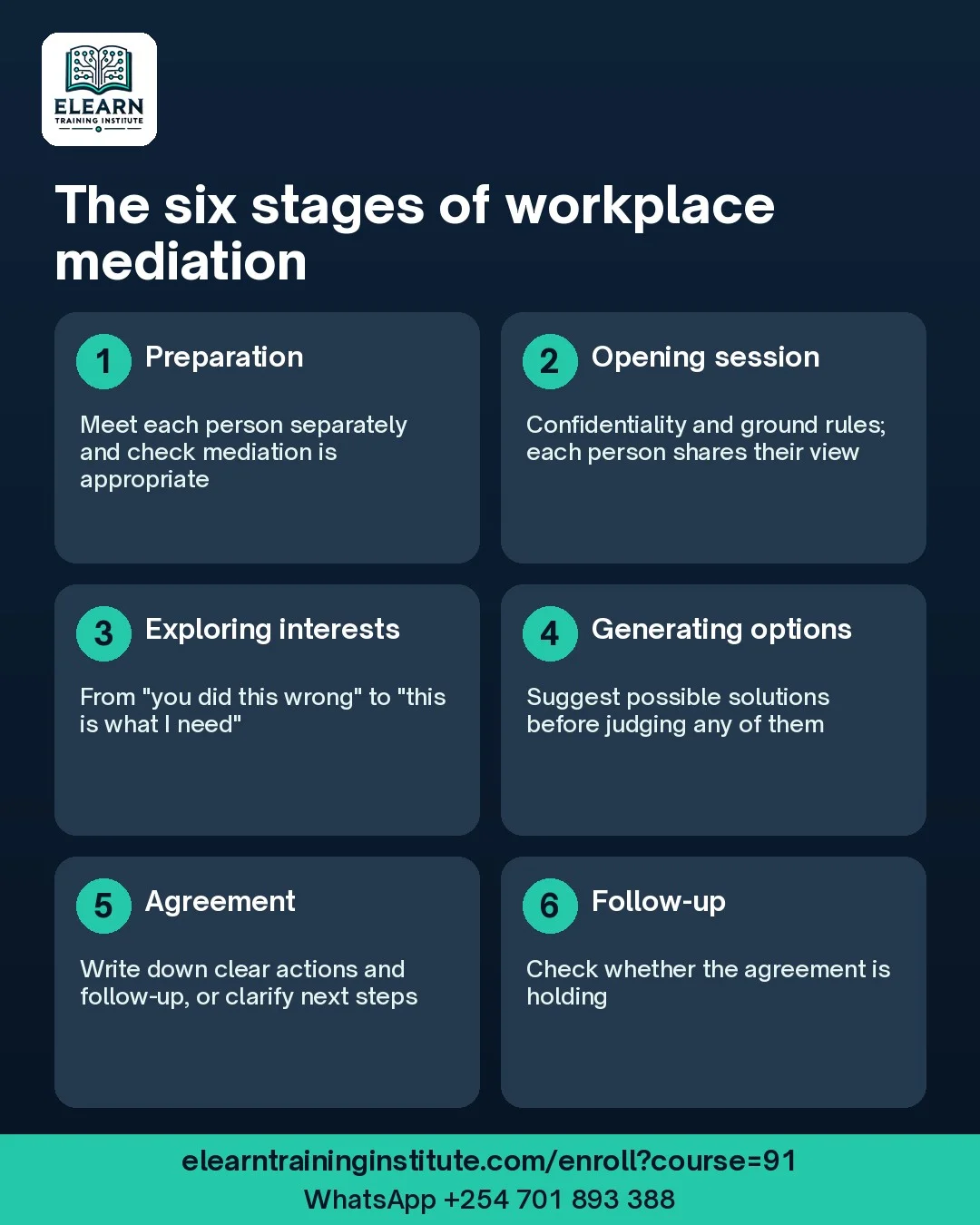
- Preparation. The mediator meets each person separately, explains the process and checks whether mediation is appropriate.
- Opening session. Both people meet with the mediator, who explains confidentiality and ground rules. Each person shares their view without interruption.
- Exploring interests. Questions move the conversation from "you did this wrong" to "this is what I need to work well".
- Generating options. Both people suggest possible solutions before judging any of them.
- Agreement. If they agree, the mediator helps write down clear actions and follow-up. If not, the mediator clarifies next steps.
- Follow-up. A later check-in shows whether the agreement is holding or needs adjusting.
Is mediation the right step?
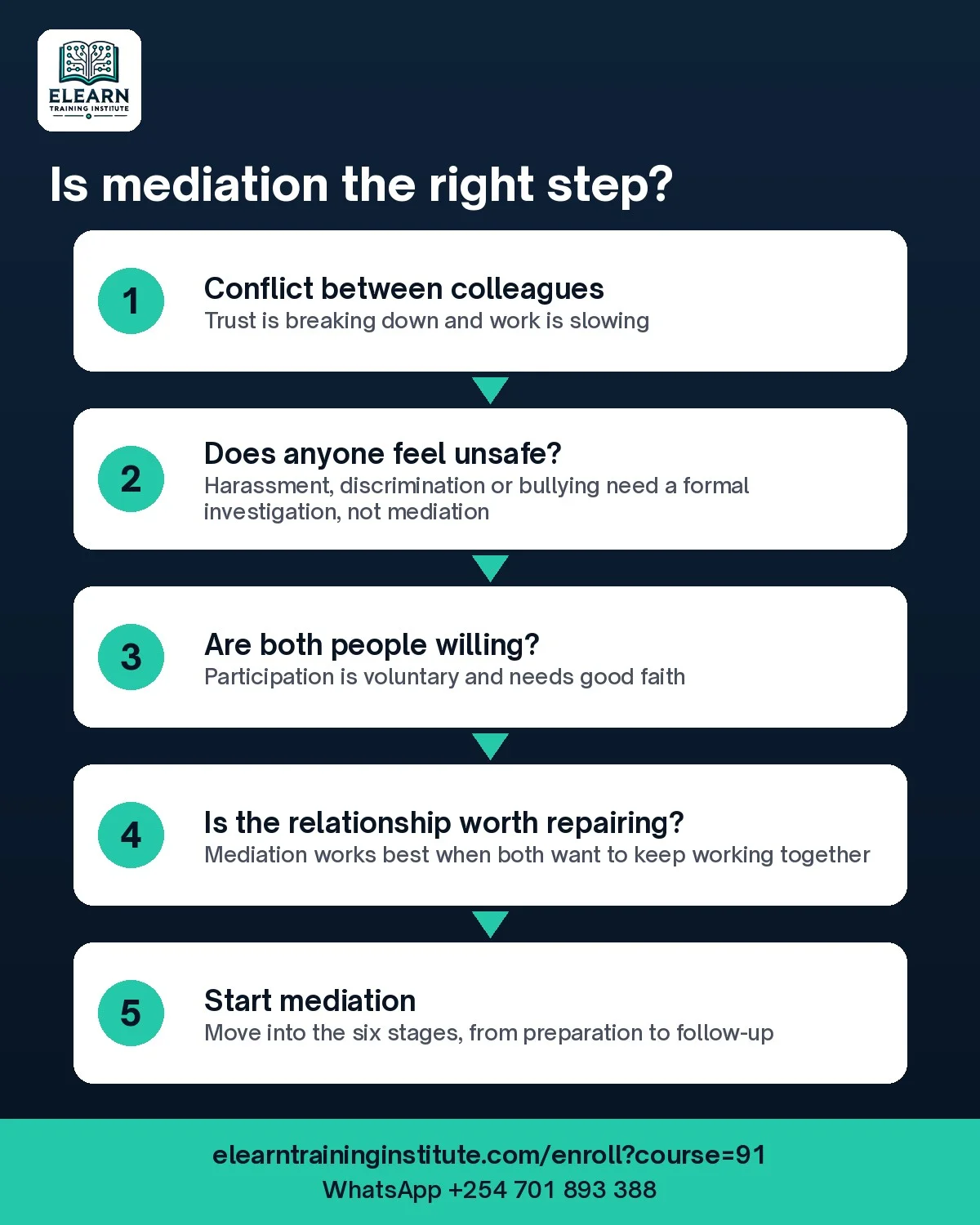
Mediation works best when:
- Both people are willing. Participation is voluntary. If one person refuses to engage in good faith, mediation will not work.
- The relationship is worth repairing. Mediation is most effective when both want to keep working together.
- Nobody feels unsafe. Harassment, discrimination or bullying need a formal investigation, not a negotiation.
Who becomes a workplace mediator?
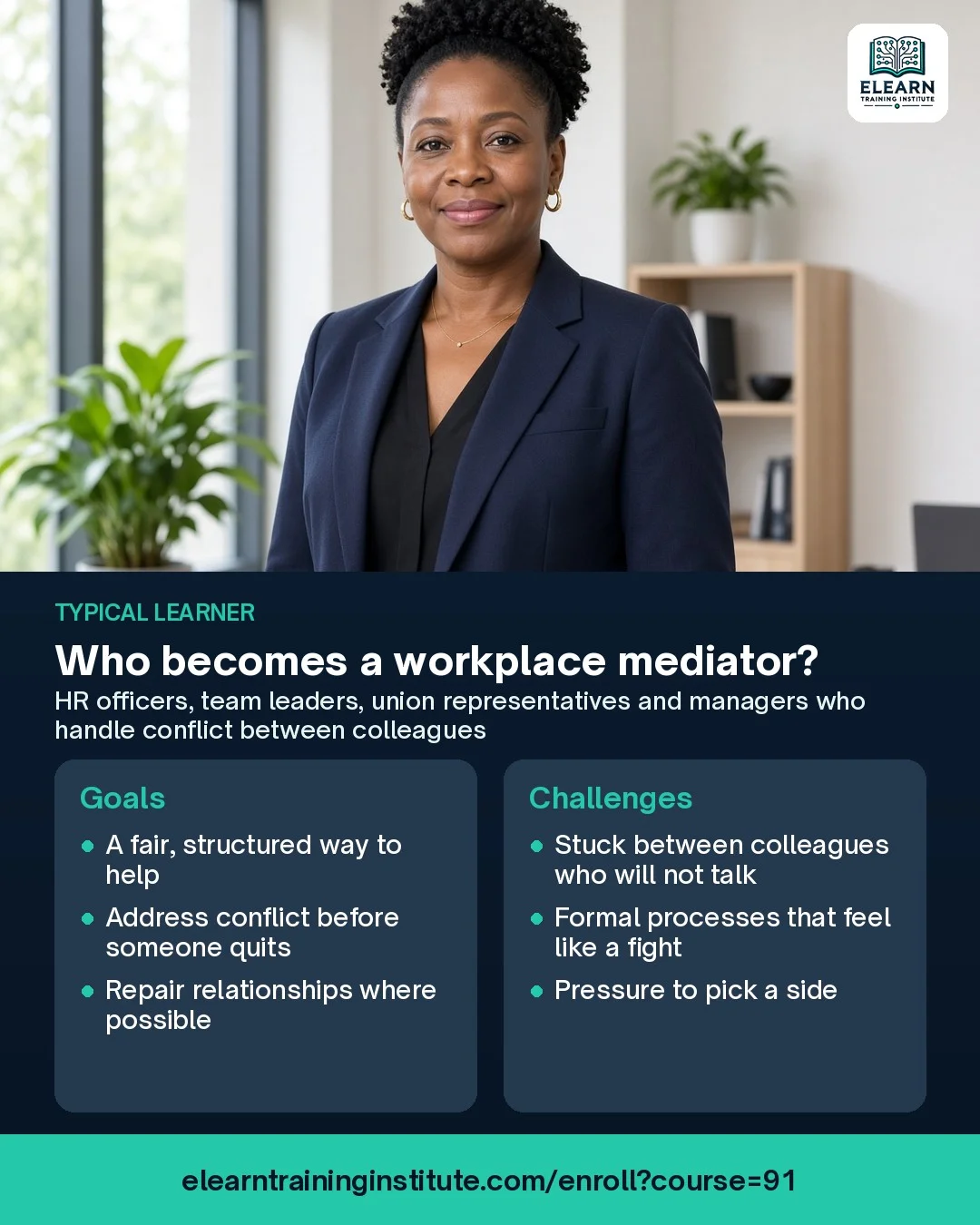
HR officers, team leaders, union representatives and managers often find themselves stuck between colleagues who will not talk to each other. Many want a structured, fair way to help instead of picking a side.
The 40 Hours Professional Mediation Course at Elearn Training Institute is a path for anyone who wants to help colleagues resolve disputes. After training, new mediators build confidence by practising and, where possible, co-mediating alongside experienced practitioners.
Mediate before someone quits
Resignations, grievances and a tense team culture cost every organisation. Workplace mediation offers a way to address conflict early, repair relationships where possible and part professionally when repair is not an option.
Apply now: Enrol in the 40 Hours Professional Mediation Course at Elearn Training Institute. WhatsApp +254 701 893 388.