A neighbour dispute over a boundary. Two colleagues who will not speak to each other. A family business partnership falling apart. Conflicts like these cost time, money and relationships when they drag on or end up in court.
Mediation offers another way: a structured conversation where the people in conflict work out an agreement together, with a neutral person guiding the process. If you are the person others already turn to when tension rises, becoming a mediator may be a natural next step.
Key takeaways
- A mediator guides a structured conversation but does not judge, take sides or impose a solution.
- Professional mediation training is the place to start.
- You do not need a law degree. Mediators come from many backgrounds.
- Practical experience, such as co-mediating with experienced practitioners, builds confidence.
- Court-referred mediation is a separate pathway with its own requirements.
Ready to Get Started?
Take the next step in your professional development.
What does a mediator do?
A mediator facilitates a conversation between people in conflict. The mediator does not decide who is right. Instead, they create space where both sides can speak, help uncover the real issues beneath surface complaints, and support the parties as they work towards an agreement both can accept.
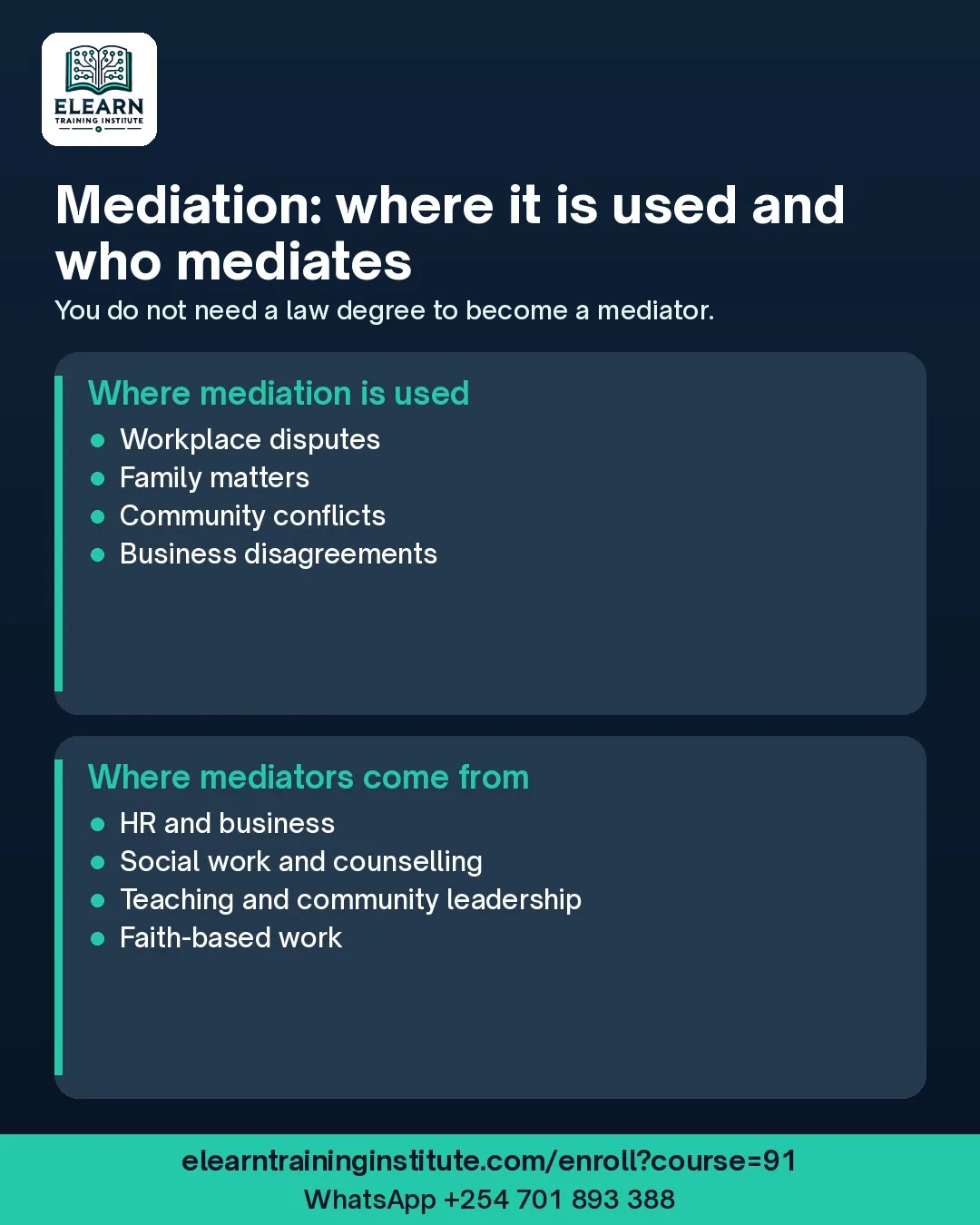
Mediation is used in many settings, including workplace disputes, family matters, community conflicts and business disagreements.
Step 1: Understand the role
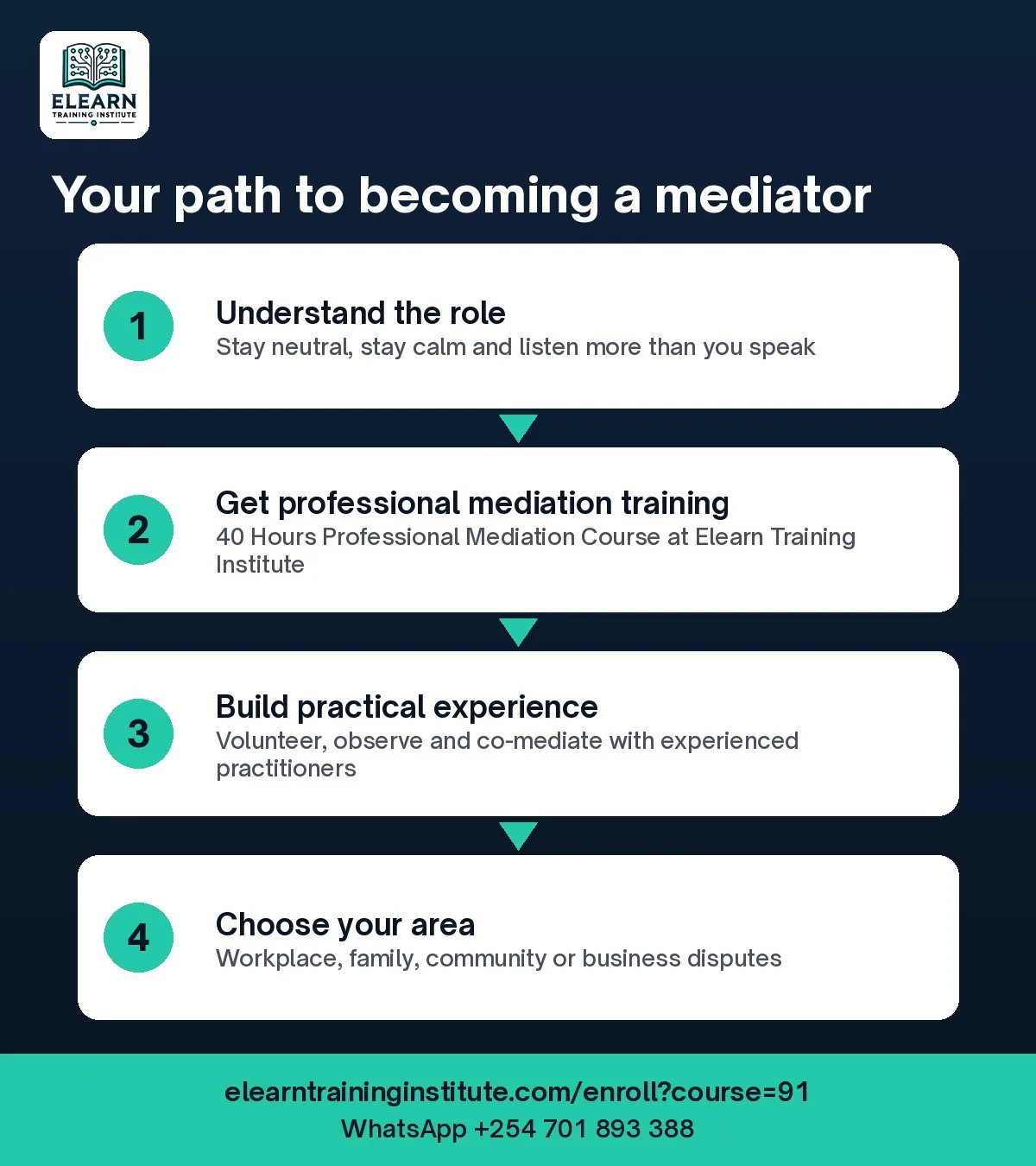
Before you train, be honest about what the role asks of you. A mediator stays neutral even when one side seems more sympathetic. They stay calm when emotions run high. They listen more than they speak. If you already find yourself calming arguments at work, at church or in your family, you may have a head start.
Step 2: Get professional mediation training
Good intentions are not enough when conflict is serious. Professional training gives you a structured foundation to build on.
The 40 Hours Professional Mediation Course at Elearn Training Institute is a path for anyone who wants to mediate workplace, family or community disputes.
Apply now: Explore the 40 Hours Professional Mediation Course at Elearn Training Institute. WhatsApp +254 701 893 388.
Step 3: Build practical experience
Confidence comes from practice. After training, look for ways to put your skills to work:
- Volunteer to mediate in community groups or faith settings.
- Observe experienced mediators, where the parties agree.
- Co-mediate alongside an experienced practitioner.
- Join a network of mediators to learn from others.
Step 4: Choose your area
Over time, many mediators focus on the setting that fits their background. An HR officer may focus on workplace disputes. A community leader may focus on neighbourhood conflicts. Someone with a business background may lean towards commercial disagreements.
If you hope to mediate cases referred by the courts, treat that as a separate pathway with its own requirements.
Who becomes a mediator?
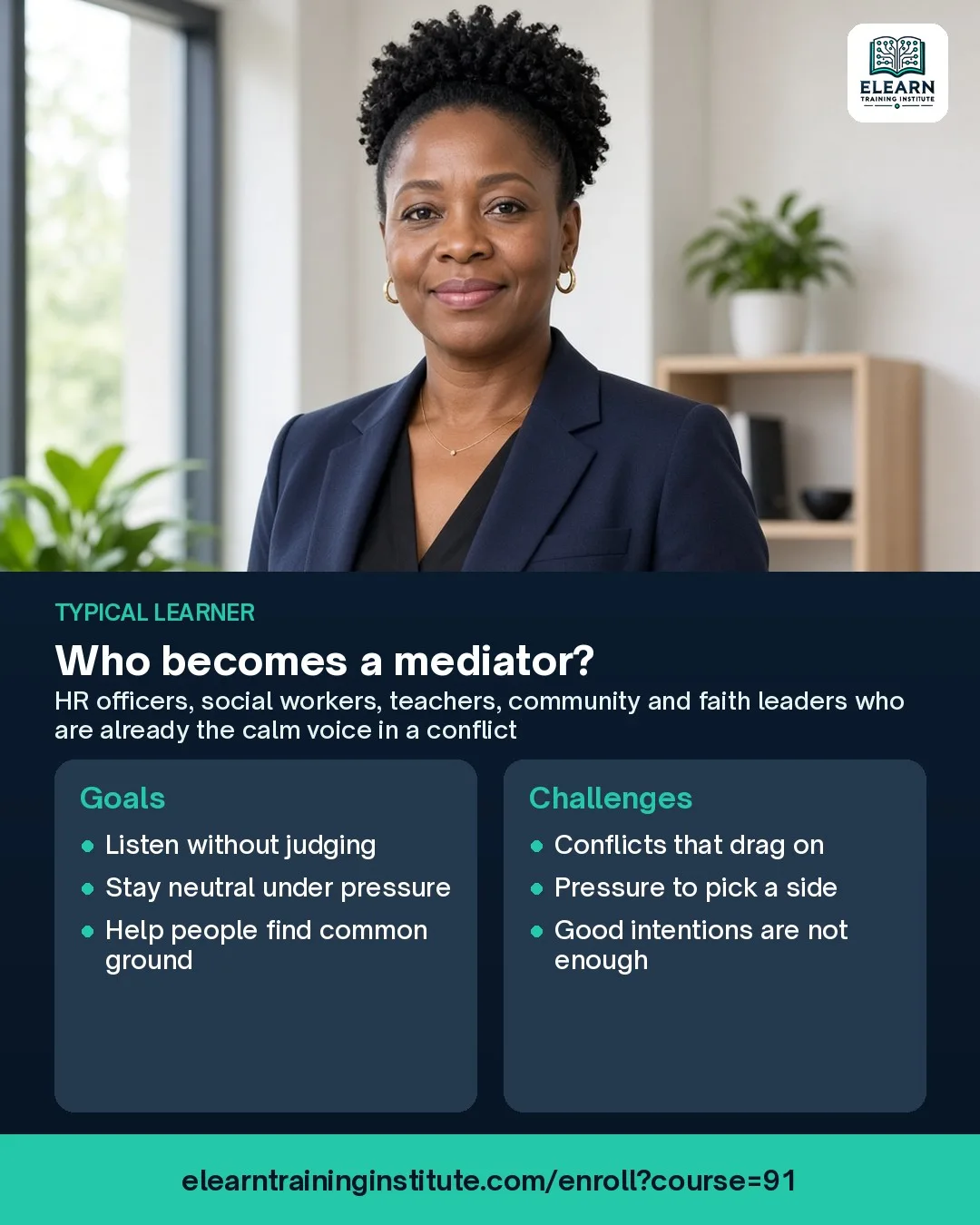
You do not need a law degree. Mediators come from HR, social work, business, community leadership, teaching and faith-based work. What they share is the ability to listen without judging, stay neutral under pressure, and help others find common ground. These skills can be strengthened through training and practice.
Start your mediation journey
Conflict is part of life. Mediators help turn it into conversation. If you can listen without judgement and help people find a way forward, mediation may be the path for you.
Apply now: Enrol in the 40 Hours Professional Mediation Course at Elearn Training Institute. WhatsApp +254 701 893 388.