Two neighbours argue over a shared fence. Family members cannot agree on how to share responsibilities after a separation. Two business partners want to close their company but disagree on the terms. None of them want to go to court, but they cannot settle it on their own.
Mediation offers another way: a structured conversation with a neutral person who helps both sides reach an agreement they can live with.
Key takeaways
- Mediation is a structured process where a neutral mediator helps people in conflict reach their own agreement.
- The mediator does not decide who is right or impose a solution. They guide the conversation.
- Mediation is used for workplace, family, business and community disputes.
- It is usually private, and both parties keep control of the outcome.
- Mediation is not right for every situation, such as cases involving violence or a severe imbalance of power.
Ready to Get Started?
Take the next step in your professional development.
What is mediation?
Mediation is a structured conversation between people in conflict, guided by a neutral third party called a mediator. The mediator does not judge who is right or wrong and does not impose a solution. Instead, they create a safe space where both parties can:
- Speak without interruption.
- Identify the real issues beneath surface complaints.
- Explore options together.
- Negotiate an agreement both can accept.
If the parties reach an agreement, it is theirs. If they do not, nothing is imposed on them and they remain free to pursue other options.
How a mediation session works
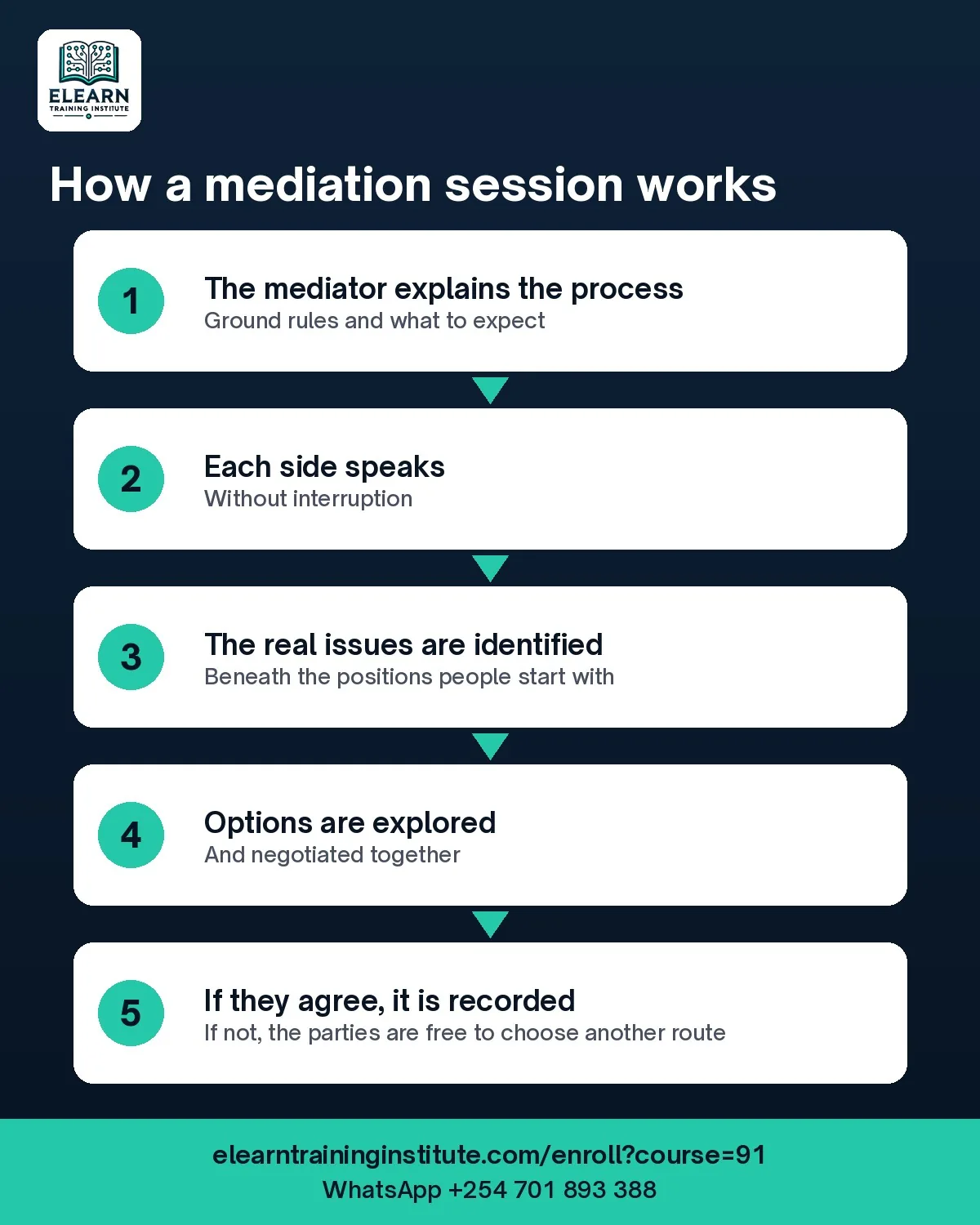
Every mediator has their own style, but most sessions follow a similar path:
- The mediator explains the process and the ground rules.
- Each side speaks without interruption.
- The real issues are identified, beneath the positions people start with.
- Options are explored and negotiated.
- If they agree, the agreement is recorded. If not, the parties leave free to choose another route.
Apply now: Explore the 40 Hours Professional Mediation Course at Elearn Training Institute. WhatsApp +254 701 893 388.
When mediation works
Mediation is often used for workplace disputes, family separation arrangements, business break-ups, neighbour and community disputes, and commercial disagreements. It works best when both parties want to resolve the issue, are willing to listen and have room to negotiate.
When mediation is not the right choice
Mediation is usually not appropriate when there is violence or abuse, a severe imbalance of power, or when one party refuses to take part in good faith. It also does not suit situations where someone needs a formal ruling or a legal precedent, which only a court can provide.
Mediation versus going to court
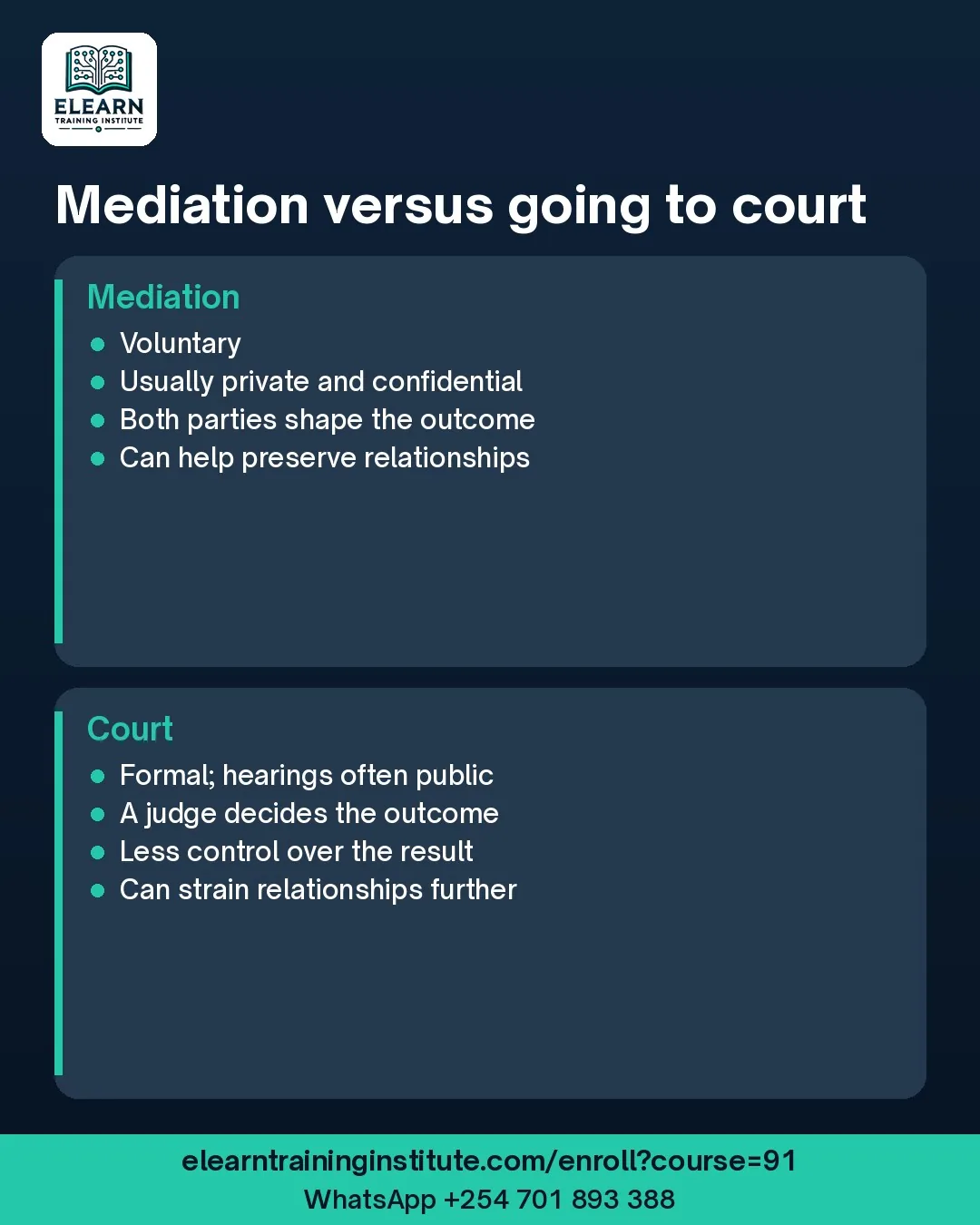
Mediation:
- Voluntary
- Usually private and confidential
- Both parties shape the outcome
- Can help preserve relationships
Court:
- Formal, and hearings are often public
- A judge decides the outcome
- The parties have less control over the result
- Can strain relationships further
Mediation does not always end in agreement. But when it works, both sides leave with an outcome they chose, not one imposed on them.
Who can become a mediator?
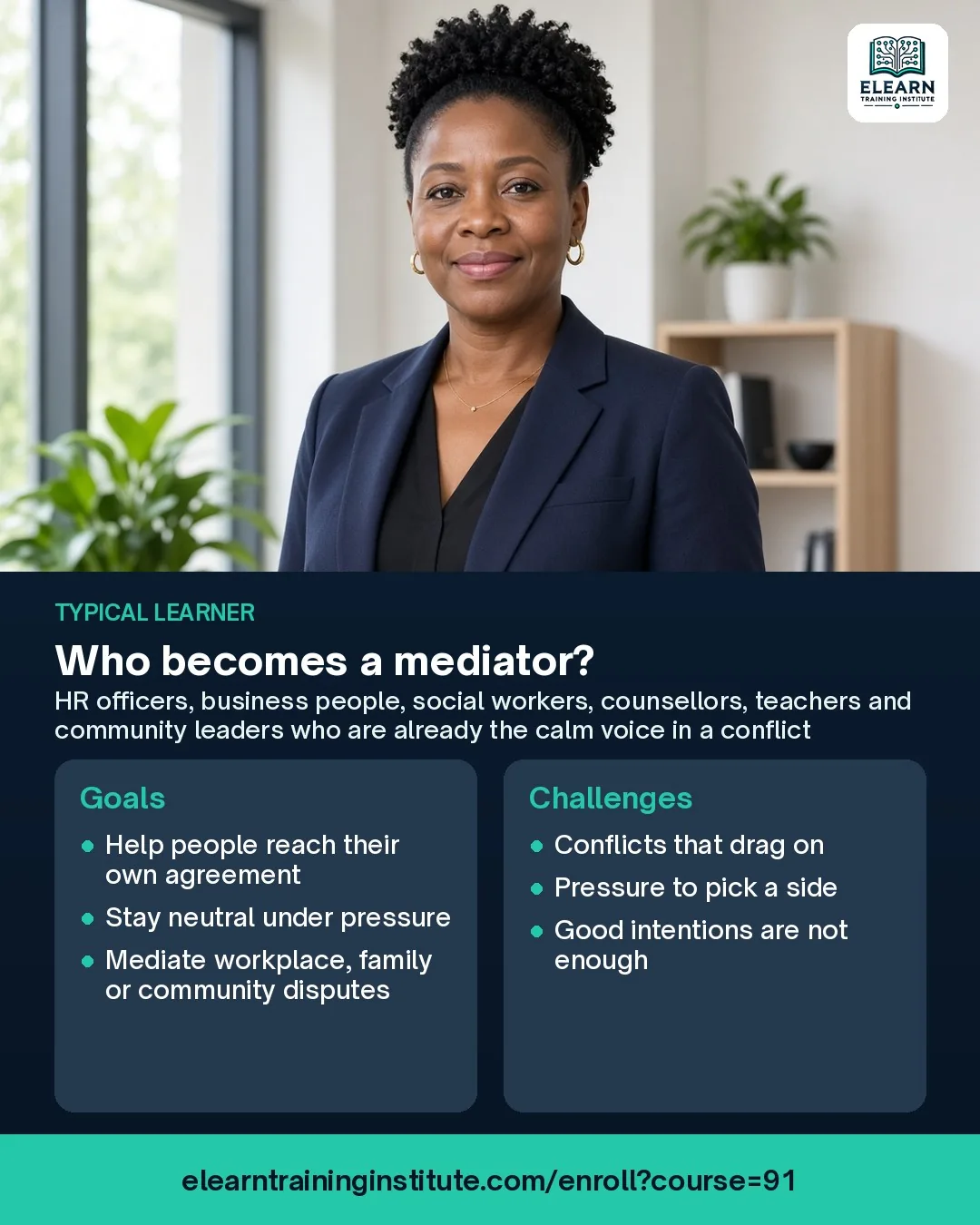
Mediation is not only for lawyers. Mediators come from HR, business, social work, counselling, teaching and community leadership. Qualities such as patience, fairness, active listening and staying neutral under pressure matter as much as background.
If you are already the person others turn to when tension rises, the 40 Hours Professional Mediation Course at Elearn Training Institute is a path for anyone who wants to mediate workplace, family or community conflicts.
Apply now: Apply for the 40 Hours Professional Mediation Course at Elearn Training Institute. WhatsApp +254 701 893 388.