Mediation works when both parties approach it constructively. But common mistakes can derail even well-intentioned attempts at resolution.
Knowing what to avoid increases your chances of reaching agreement.
Key takeaways
- Prepare before you go in: know what you want and why.
- Listen, even when you disagree. Acknowledging a concern is not the same as agreeing with it.
- Stay on the issues you agreed to discuss and avoid ultimatums.
- Be honest about relevant facts and stay open to workable solutions.
- The mediator guides the process. The parties create the agreement.
Ready to Get Started?
Take the next step in your professional development.
Mistake 1: Coming unprepared
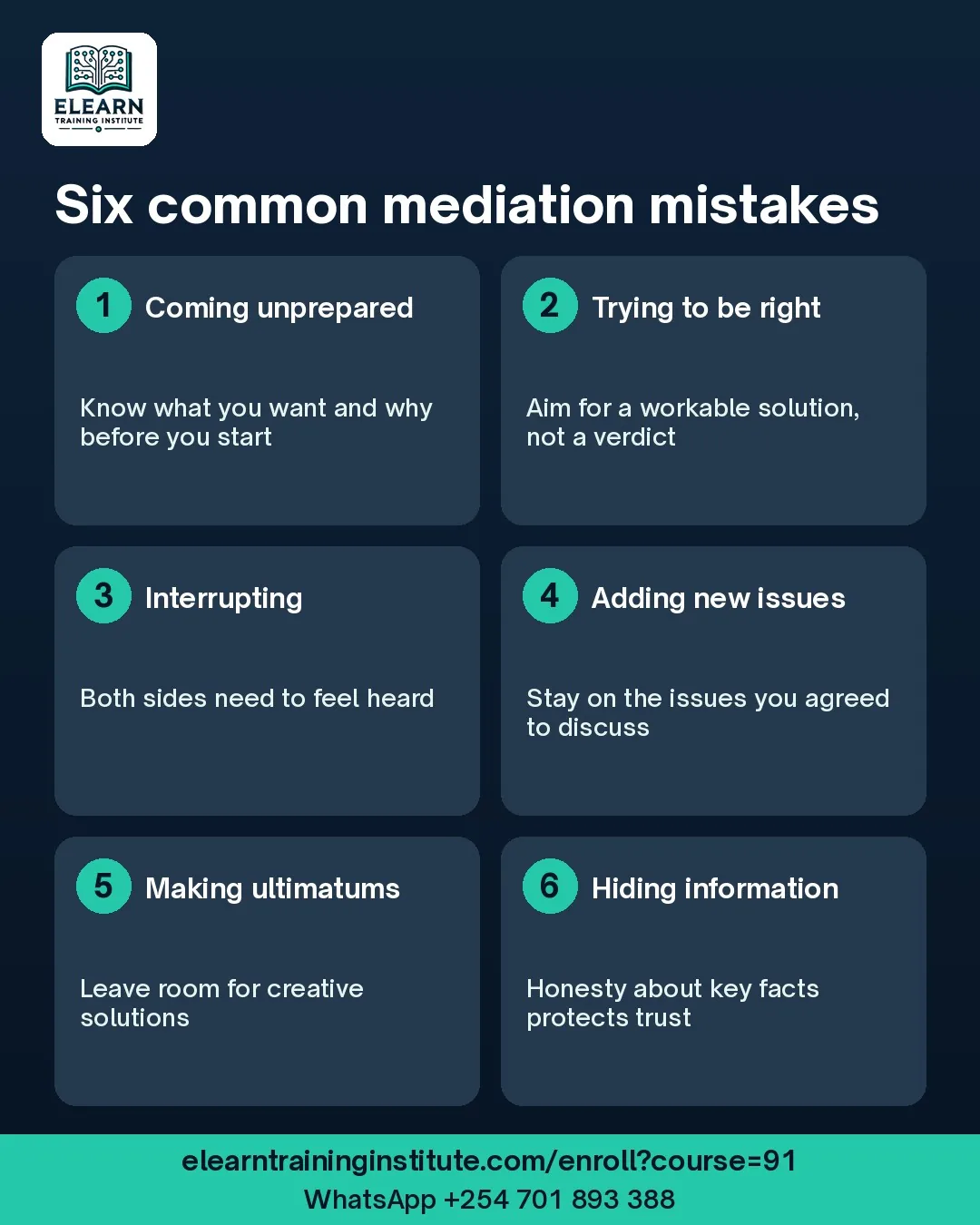
Many people enter mediation without clarifying what they want or why they want it. They hope the mediator will figure it out for them.
If you do not know what you are trying to achieve, you cannot judge whether a proposed solution meets your needs.
Before mediation, write down your interests, not just your position. Your position is what you say you want. Your interests are why you want it. Understanding your own interests helps you spot solutions you had not considered.
Mistake 2: Trying to be right instead of reaching a resolution
Some people enter mediation determined to prove they are right and the other party is wrong. They treat it like a contest with a winner and a loser.
Mediation is about finding a workable solution both parties can accept. If your goal is to be declared right, mediation may not suit you.
Apply now: Work with people in conflict? Learn the process with the 40 Hours Professional Mediation Course at Elearn Training Institute. Questions? WhatsApp +254 701 893 388.
Mistake 3: Interrupting and not listening
Interrupting the other party signals that you do not value what they have to say. It raises tension and makes resolution harder.
In mediation, both parties need to feel heard. If you interrupt constantly, the other party may shut down or become defensive. Neither response leads to agreement.
Listen even when you disagree. You do not have to agree with someone to hear their perspective. Understanding their view helps you find solutions that address both sides' concerns.
Mistake 4: Bringing new issues into the discussion
Mediation works best when it is focused on specific issues. If every time you get close to resolving one problem someone introduces a new complaint, resolution becomes very difficult.
Stick to the issues you agreed to discuss. If other problems need attention, you can raise them separately. Trying to solve everything at once often means solving nothing.
Mistake 5: Making ultimatums
Ultimatums shut down negotiation. When you say "I will only accept X and nothing else," you remove any room for creative solutions.
Mediation needs some flexibility. If you cannot move on anything, another approach may suit you better.
Mistake 6: Refusing to acknowledge the other party's concerns
You do not have to agree that the other party's concerns are valid. But refusing to acknowledge that they have concerns makes resolution hard.
Acknowledgment is not agreement. You can say "I understand this is important to you" without saying "I agree with you."
When people feel their concerns are acknowledged, they are often more willing to work toward a solution.
Mistake 7: Expecting the mediator to decide
The mediator guides the process. The mediator does not decide who is right or impose a solution. If you expect the mediator to decide the outcome, you may be disappointed.
The decisions stay with the parties. You create the agreement together.
Mistake 8: Threatening court
Threatening to take the other party to court if they do not accept your terms undermines the process. It signals that you are not taking part in good faith.
Mediation works when both sides come to find a way forward together.
Mistake 9: Hiding information
Mediation works best when both parties are honest about relevant facts. Hiding information might seem to give you a short-term advantage, but it often backfires.
If the other party discovers that you held back something important, trust can collapse and agreement becomes much harder.
Mistake 10: Refusing to consider any solution
If you reject every proposed solution without offering alternatives, mediation cannot move forward. At some point, you need to say what you could accept.
Saying no to everything is not negotiating. If nothing the other party offers is acceptable, it is worth asking whether mediation is the right process for your situation.
How to approach mediation constructively
Come prepared. Know what you want and why. Listen to the other party. Focus on interests, not positions. Be willing to compromise on some things. Acknowledge the other party's concerns. Take part in good faith.
If both parties do these things, mediation has a good chance of working. If even one party refuses, it becomes very difficult.
Who this is for
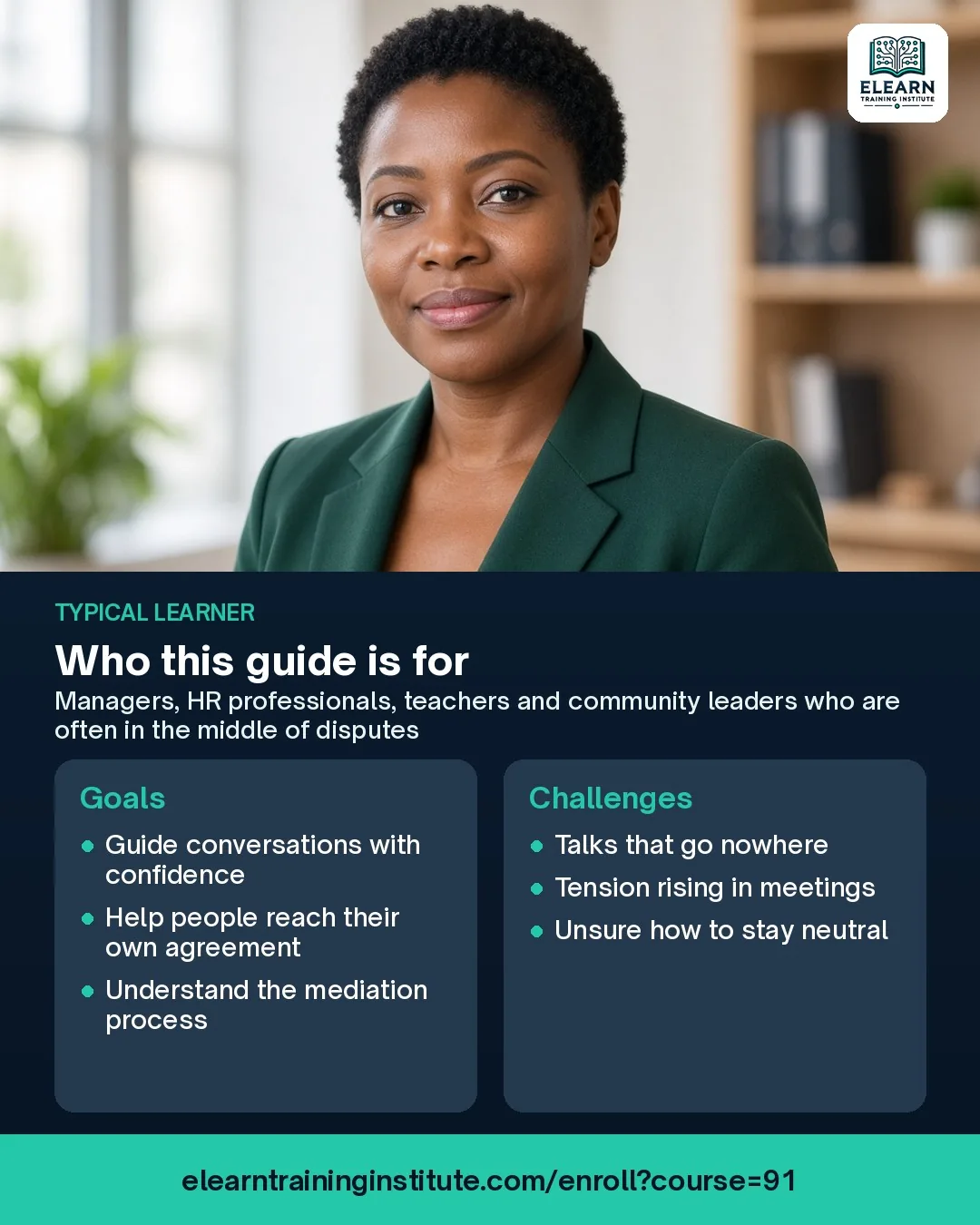
Managers, HR professionals, teachers, social workers and community leaders often find themselves in the middle of disputes. Understanding common mediation mistakes helps them guide conversations with more confidence.
Where to start with mediation
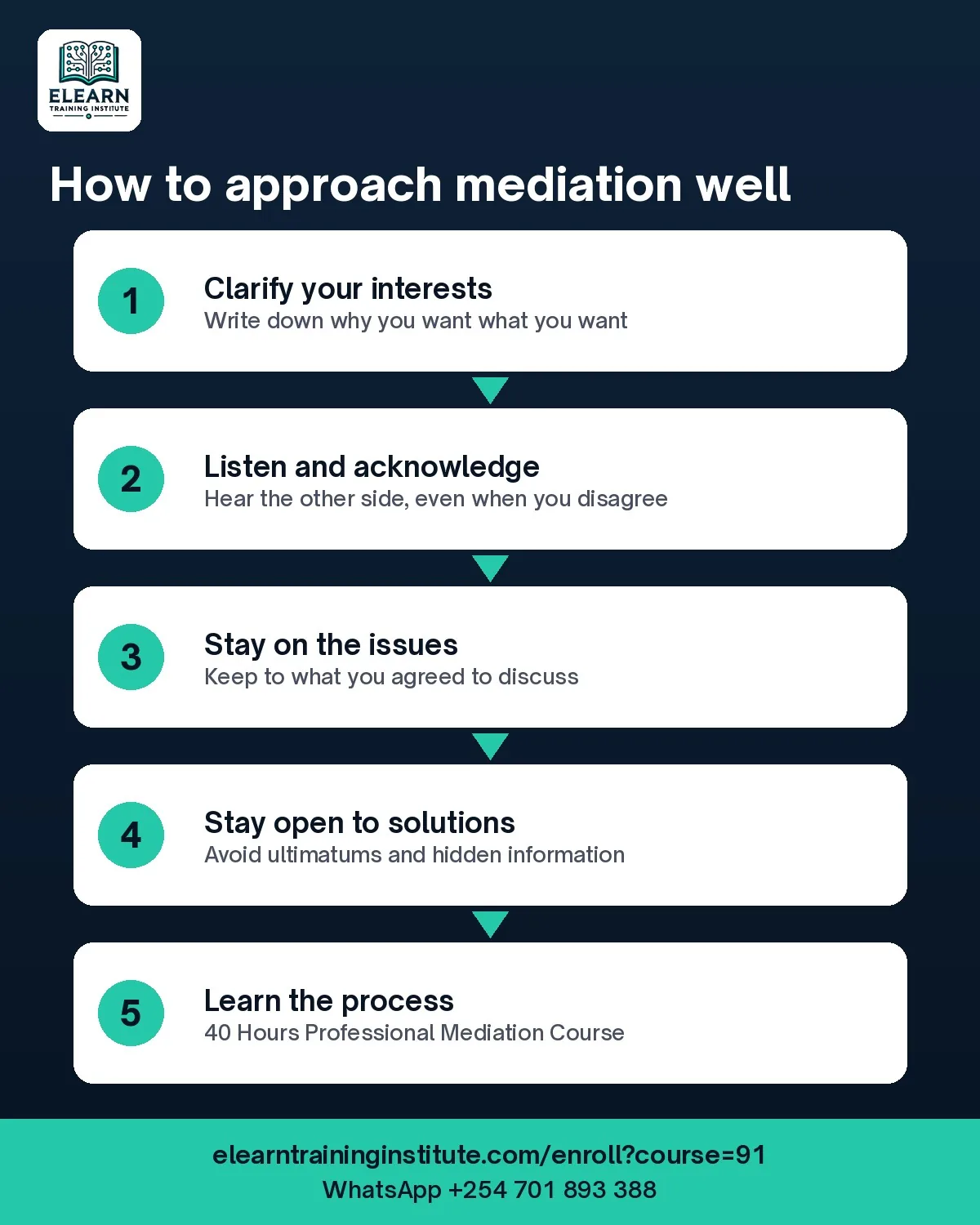
- Clarify your interests. Write down why you want what you want.
- Listen and acknowledge. Hear the other side, even when you disagree.
- Stay on the issues you agreed to discuss.
- Stay open to solutions. Avoid ultimatums and hidden information.
- Learn the process: the 40 Hours Professional Mediation Course at Elearn Training Institute.
Apply now: Enrol in the 40 Hours Professional Mediation Course at Elearn Training Institute, or WhatsApp +254 701 893 388.