Search for mediation courses in Kenya and you will find many options. Some are short introductions. Some focus on one setting, such as the workplace or the family. Some are aimed at beginners, while others assume you already handle disputes.
If you want to learn mediation, how do you choose? Here is what to look for and where to start.
Key takeaways
- Mediation courses vary in length, focus and the learners they are designed for.
- Start by deciding where you want to use mediation: at work, in families or in the community.
- Look for clear information on who a course is for, how long it is and how it is delivered.
- Choose an institution that publishes clear contact details and answers your questions.
- You do not need to be a lawyer to mediate. Mediators come from many backgrounds.
Ready to Get Started?
Take the next step in your professional development.
What to look for in a mediation course
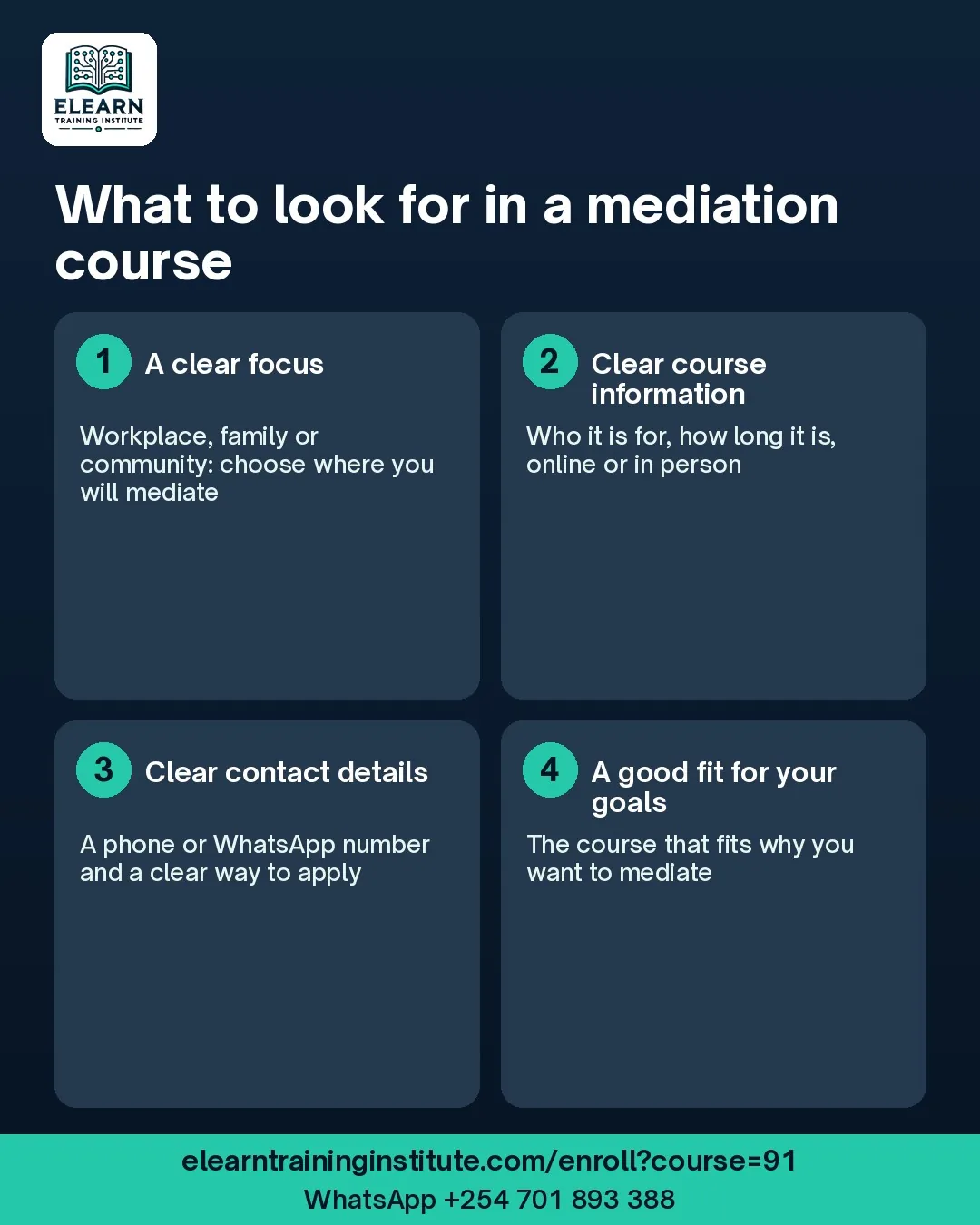
A clear focus. Mediation is used in many settings. Workplace disputes, family disagreements and community conflicts each bring their own pressures. Some courses cover several settings, while others concentrate on one. Choose based on where you plan to use mediation.
Clear course information. A good course page tells you who the course is for, how long it is and how classes are delivered, online or in person. If you cannot find these basics, ask before you enrol.
Clear contact details. Look for an institution you can reach easily, with a phone or WhatsApp number and a clear way to apply. If an institution is hard to reach or cannot explain its course, treat that as a warning sign.
A good fit for your goals. Think about your work today. An HR officer, a church leader and a teacher may all want mediation skills, but for different reasons. The right course is the one that fits why you want to mediate.
Apply now: Explore the 40 Hours Professional Mediation Course at Elearn Training Institute. WhatsApp +254 701 893 388.
Do I need to be a lawyer to learn mediation?
No. Mediation is a people skill as much as a process. It suits:
- HR professionals managing conflict between colleagues.
- Managers handling disagreements in their teams.
- Social workers supporting families in conflict.
- Teachers dealing with disputes in schools.
- Community and church leaders helping neighbours settle disagreements.
If people already come to you when they cannot agree, mediation may be a natural next step.
Who studies mediation?
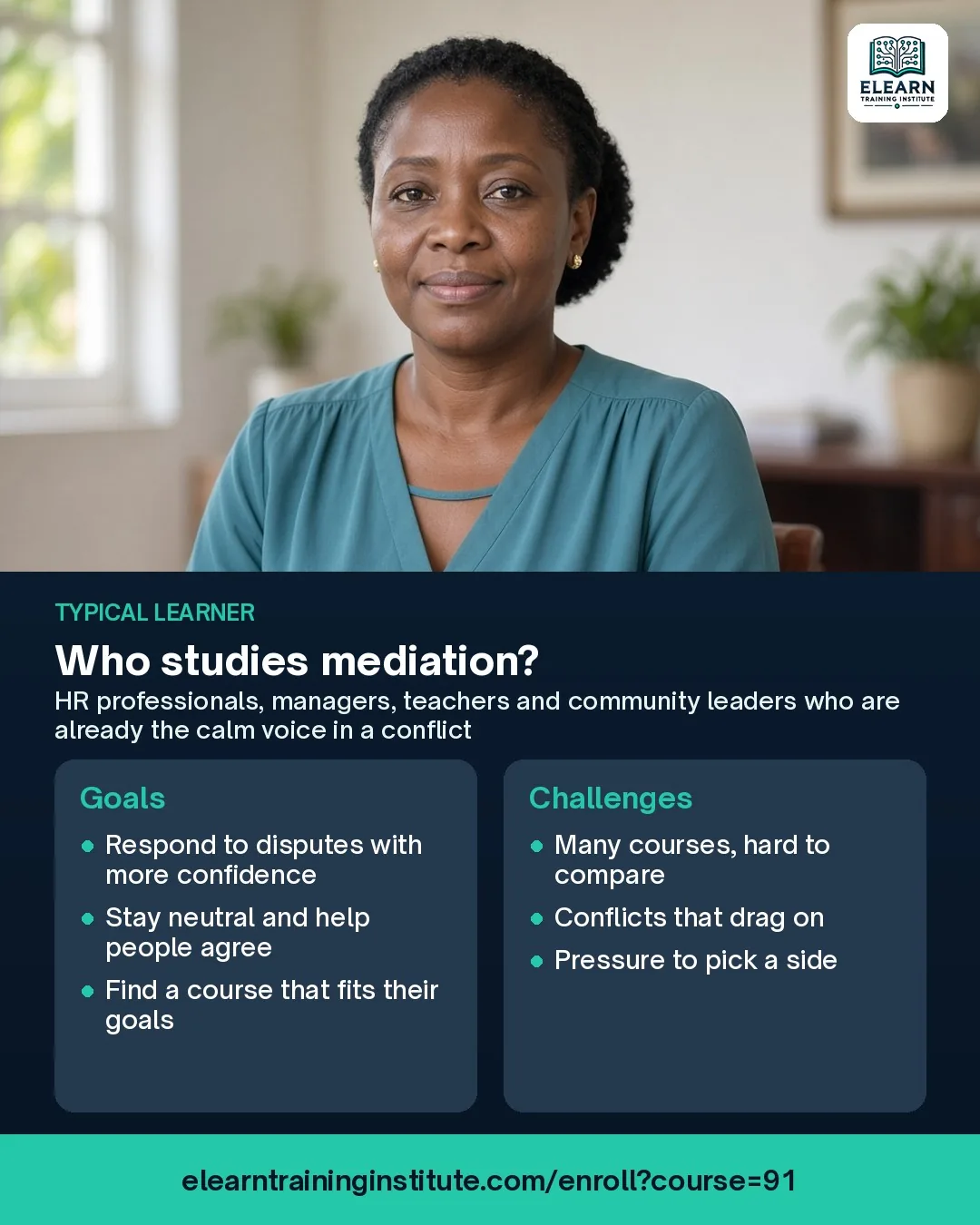
Many people who look for mediation courses are already the calm voice in the room. They are trusted to listen, stay neutral and help others find a way forward. What they want is a clearer, more confident approach to the disputes they already face.
How to choose your mediation course
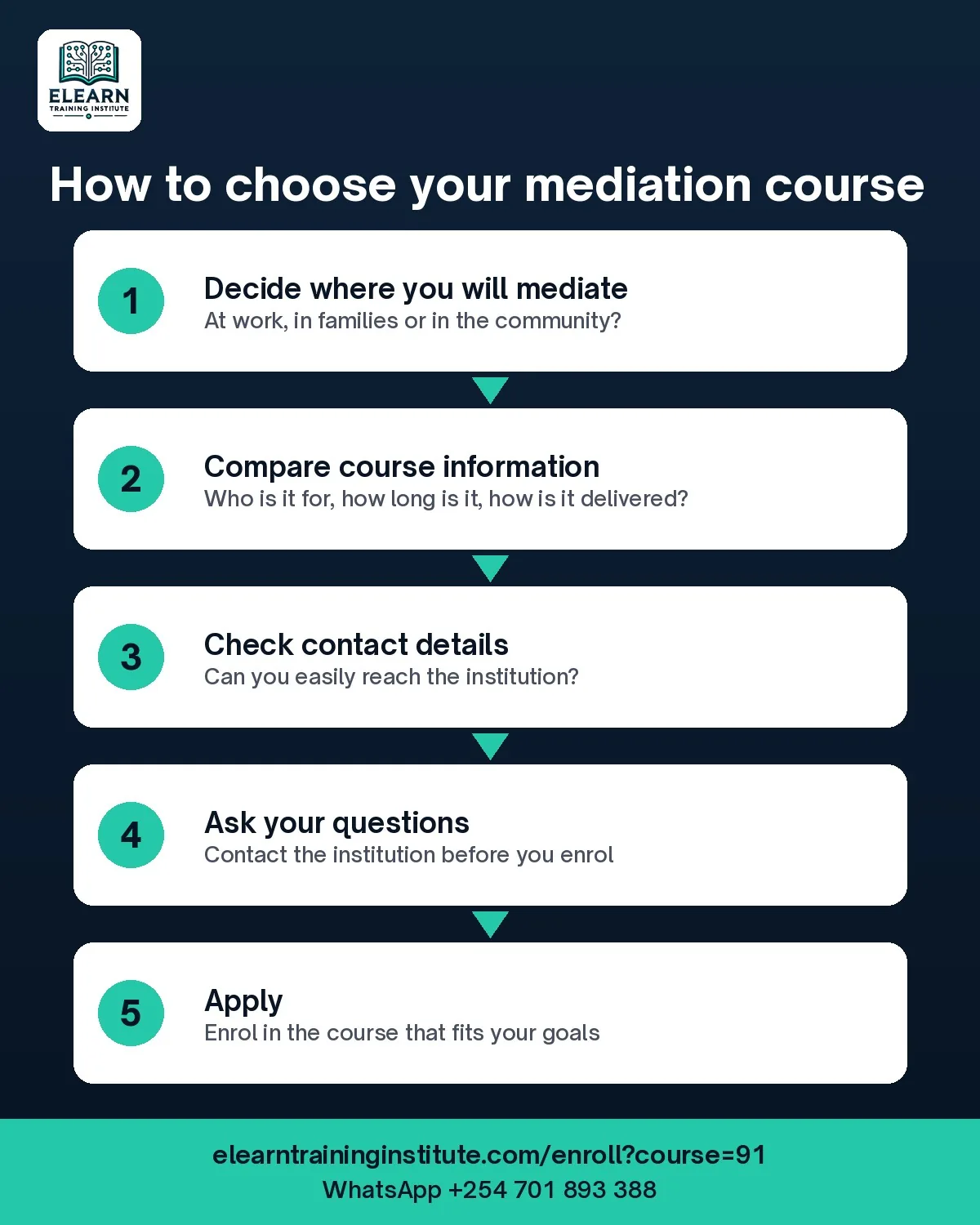
- Decide where you will mediate. At work, in families or in the community?
- Compare course information. Who is each course for, how long is it and how is it delivered?
- Check contact details. Can you easily reach the institution?
- Ask your questions. Contact the institution before you enrol.
- Apply. Enrol in the course that fits your goals.
Where to start
If you work in HR, manage a team or support people in conflict, mediation skills can help you respond with more confidence. Start with a course that is clear about who it is for and how it runs, from an institution you can easily reach.
The 40 Hours Professional Mediation Course at Elearn Training Institute is a place to start.
Apply now: Apply for the 40 Hours Professional Mediation Course at Elearn Training Institute. WhatsApp +254 701 893 388.